
Which Actions Actually Count Toward a Casino Tournament Score?
Introduction
A casino tournament leaderboard may look like a ranking of who won the most. In practice, scores are based on actions recognised by the event rules, recorded during a set period and converted into points according to a specific formula.
A large wager, dramatic win or long session may feel decisive, but none automatically affects the tournament result. What matters is what the scoring system records.
There is no universal scoring model. One tournament may rank players by chips accumulated, another by points for specific outcomes, and another by balance changes over a set period. The rules—not the spectacle—determine what counts.
How players approach the score
Players who study the rules can tell which actions affect the leaderboard and which only change their bankroll. That knowledge offers an analytical advantage, though it does not guarantee a better result.
In a points-based format, players need to know which outcomes earn points and whether values vary by round, game or level. In a chip- or balance-based format, the focus is on the total recorded at the end of the scoring period. The rules of one format do not necessarily apply to another.
Playing more does not always mean scoring more. If only registered games or designated tables count, activity elsewhere may not affect the standings. And if the tournament has a fixed number of rounds, play outside those rounds may be irrelevant, regardless of the result.
Disciplined competitors treat the tournament as a separate contest layered over the casino game. They track when scoring begins, which actions qualify and when the final score is measured, rather than relying on a general sense of whether they are winning.
Key factors
Eligible games and actions. The rules may restrict scoring to named games, tables, machines, rounds or hands. A wager counts only if it is placed in an eligible setting and meets the stated conditions. Some formats award points for the action itself; others count only its result.
The scoring formula. A tournament may reward a final chip total, net change, points per outcome, qualifying wins or another defined measure. These are not interchangeable. A striking win may not put a player ahead in a format that rewards consistency, volume or a different end-of-round total.
Time and cut-off rules. Scores usually apply to a specific window. The start and end times, as well as the treatment of unfinished rounds, can matter. An outcome just outside the window may not qualify. A wager placed within it may be handled according to the rules for settling or recording that wager.
Limits and caps. Some systems limit the number of scoring attempts, the points available from one action or the contribution from a particular game. As a result, repeating an action may not keep adding points.
Bonuses and penalties. A tournament may award bonus points for specific milestones or deduct points for rule breaches. These are part of the formula, not matters of informal judgement. If a bonus is not stated in the rules, players should not assume an unusual or impressive result will earn extra credit.
Verification and records. Official scores depend on what the event can verify. A result may need to appear in the tournament system, be recorded by staff or meet another stated standard. Personal notes or a remembered result may not override the official record.
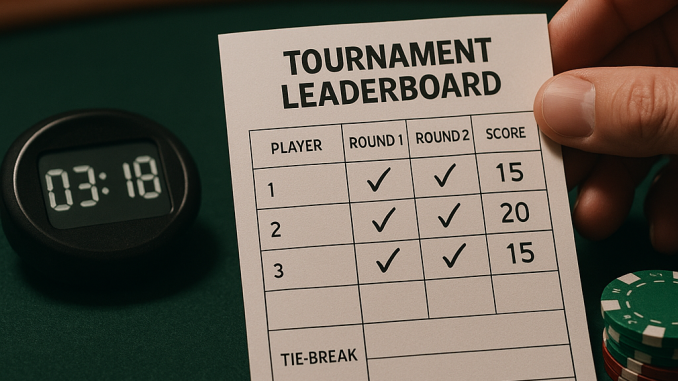
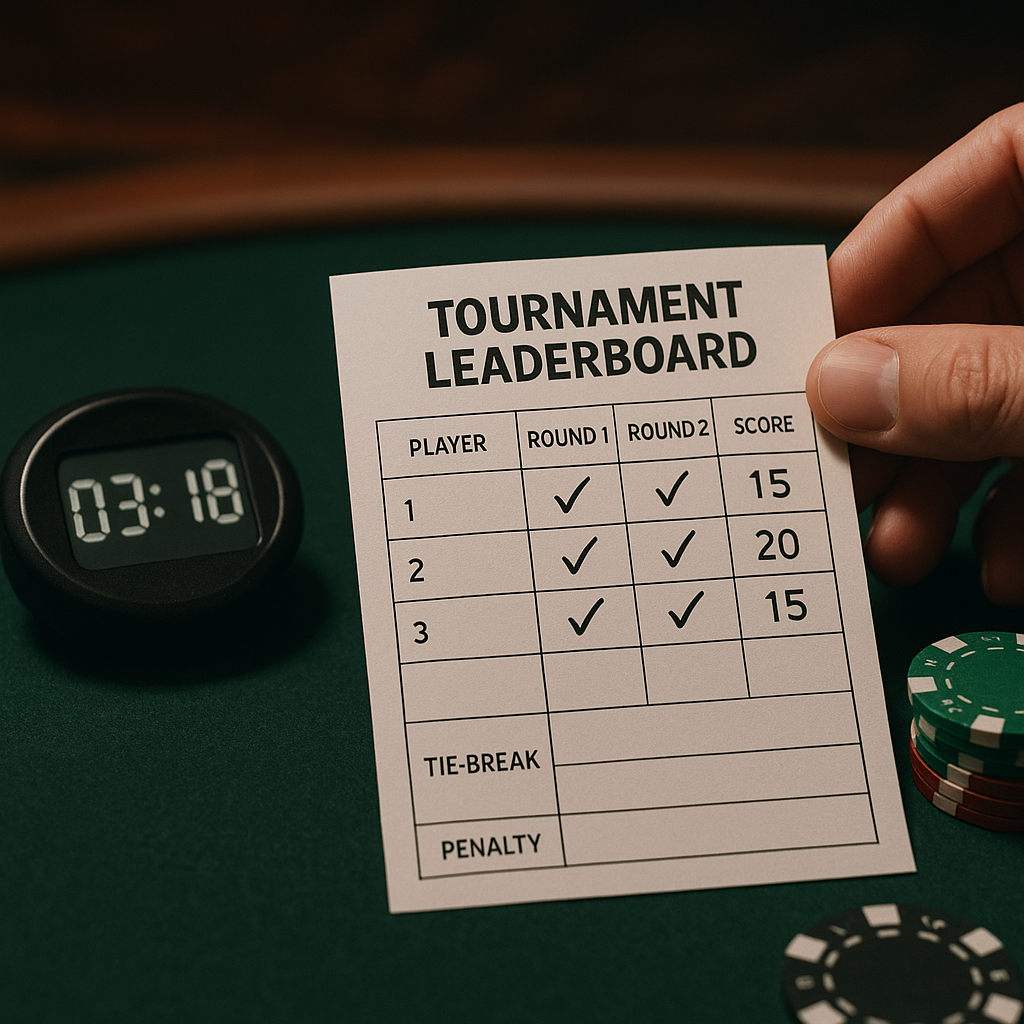
Ties and final ranking. Rules may resolve equal scores with a tie-break, shared placement or another procedure. The order of tie-breaks matters: a secondary measure can decide the ranking even when players are level on the headline score.
To check whether an action counts, match it to an eligible event, a scoring window and a specific part of the formula. If any of these is unclear, consult the tournament terms rather than judging by the size of a wager or payout.
Example tournament session
Consider a fictional event that awards points for results recorded on designated machines during a one-hour round. A player wins on an eligible machine, then plays a different game outside the listed pool and gets a large payout. The payout may increase the player’s balance, but it does not add to the tournament score under these rules.
Suppose the player then makes several qualifying plays, but the event caps the number of attempts that can earn points. Once that limit is reached, further play may not improve the score. A rival with fewer total plays could still rank higher by getting more from the attempts that count.
At the end of the round, both players have the same score. If the published tie-break gives priority to another measure, that measure—not the size of either player’s biggest win—decides the ranking. The result follows the tournament’s scoring rules, provided they were set out in advance.
A leaderboard records defined criteria, not every casino outcome. The total shown is only the final result of rules covering eligibility, timing, caps, verification and tie-breaks.
Conclusion
A casino tournament score reflects whatever the event rules define as countable: a qualifying action, an outcome, a balance at a set time or a combination of measures. Wagers and wins outside those rules may have no effect on the standings.
Start with the scoring formula, then check eligible activity, the measurement period, any limits and the tie-break procedure. With those details in hand, the leaderboard is easier to understand—and less likely to be mistaken for a simple ranking of the biggest wins.