
Introduction
Claims about local air quality are often presented as settled fact. A road is blamed for pollution, a new development is said to have changed the neighbourhood, or officials declare the air safe. But conditions can vary from street to street, and a single official monitor cannot answer every local question.
Citizen science offers a practical way to investigate. Residents can collect measurements, see when and where readings change, compare them with official data and ask decision-makers more informed questions. The aim is not to turn every household into a laboratory, but to make claims testable. In citizen science projects, shared procedures help make those measurements useful to others.
These projects also teach an important distinction: a measurement is evidence, not a verdict. Its value depends on the instrument, where and when it was used, and how the results are interpreted.
Analysis of teams or players
A local air-quality debate is best understood as a contest between claims, not people. One side may rely on official monitoring stations and established methods. Residents may describe odours, dust or traffic, while others bring readings from low-cost sensors near homes, schools or busy roads. Citizen science can bring these different observations into a shared discussion.
Each source has strengths and limitations. Regulatory monitors are often carefully maintained and useful for tracking change over time, but they may be too far away to capture sharp differences beside a road. Residents’ observations can reveal patterns that formal networks miss, but smell and visibility alone cannot identify a pollutant or measure its concentration.
Low-cost sensors add local, repeated measurements. They can show whether readings rise at particular times or locations, but they are often more affected by environmental conditions than reference-grade instruments. In citizen science, treat their results as clues to investigate, not as direct substitutes for official measurements.
Residents are active participants, not spectators. They can choose where to place devices, record unusual events and check that everyone follows the same procedure. In a well-run citizen science project, this shared method matters as much as the equipment: it gives the data context that others can review.
Key factors
Start with a clear question. “Is the air polluted?” is too broad to guide a useful project. “Are particle readings usually higher beside this road during the morning commute than at a nearby residential site?” is specific, measurable and open to testing. This focus helps citizen science teams plan what to measure.
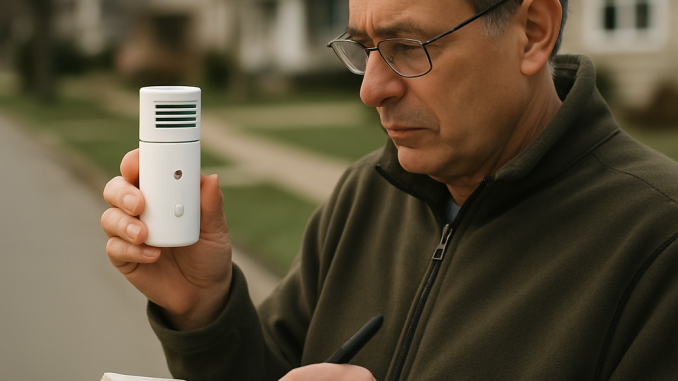
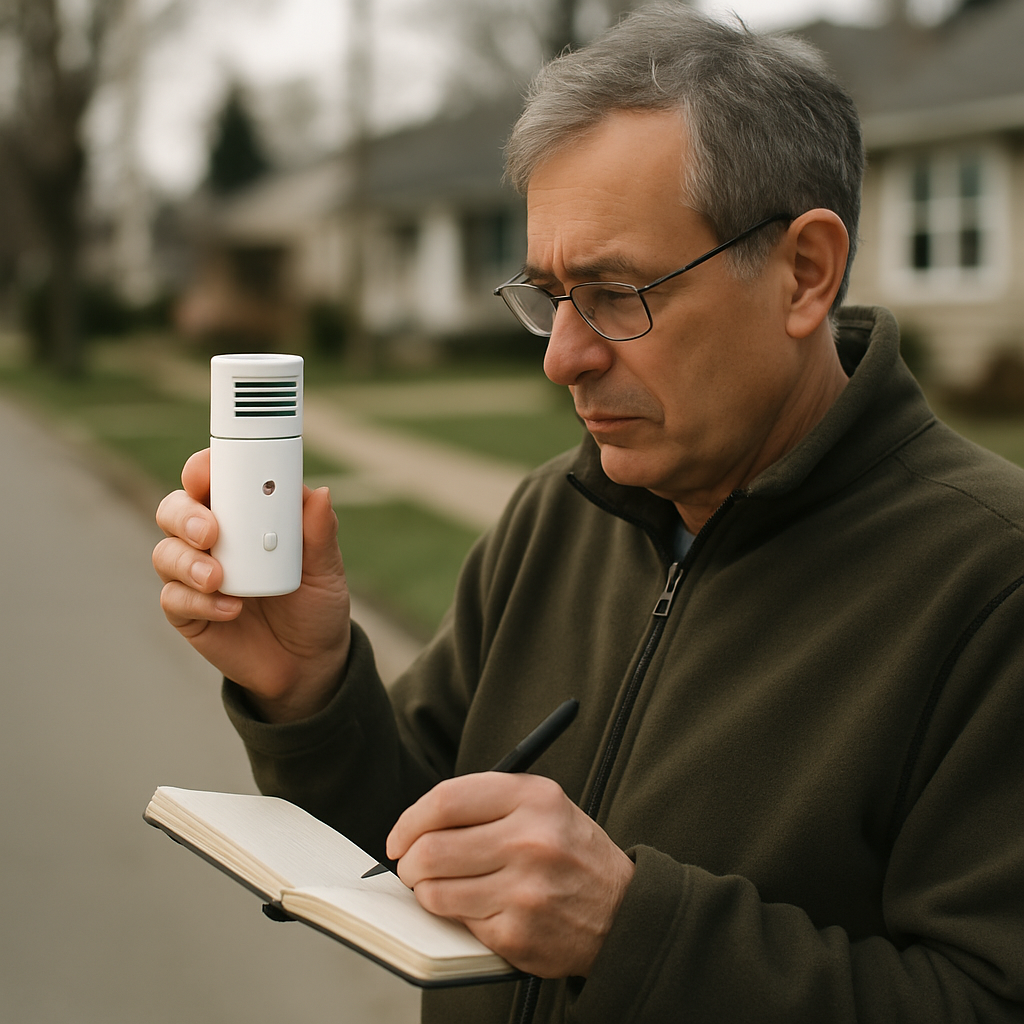
Placement matters. A sensor near an exhaust outlet, under a roof or against a wall may record conditions that do not represent the wider area. Participants should note its height, nearby sources and obstructions, and whether it is indoors or outdoors. Consistent placement makes comparisons more useful.
Time matters too. A brief spike could come from a passing vehicle, cooking smoke, construction dust or a sensor disturbance. On its own, it does not show that the neighbourhood has a persistent problem. Measurements collected over several days and under different conditions can help distinguish a pattern from an isolated event.
Calibration and comparison are also important. When possible, project organisers can place community devices near a trusted reference monitor and compare their readings over time. This will not remove every limitation, but it can reveal systematic differences and help build confidence in the results. Such checks strengthen citizen science findings.
Weather affects the picture as well. Wind can carry emissions away or bring them from elsewhere. Rain, humidity and temperature can affect some sensors and the particles they measure. A rise at one site is harder to interpret if the project has not recorded relevant conditions or considered nearby sources.
Finally, results must be presented carefully. A colourful map can suggest more precision than the measurements support. Responsible projects report uncertainty, missing data and sensor limitations, and distinguish observed patterns from possible explanations. This is science literacy in practice: understanding what a number can—and cannot—show. Clear reporting is essential when citizen science produces environmental data for public discussion.
Match scenario
Imagine residents suspect that traffic is raising particle levels near a school. A small group places sensors at agreed locations, collects readings over a set period and logs traffic, weather and interruptions. The aim is not to prove that one road is dangerous with a single device, but to see whether repeated measurements reveal a local pattern worth investigating. This is a practical example of citizen science supporting air quality monitoring.
First, the group checks that the devices work and records where each one is installed. They compare roadside readings with those from a quieter location, noting when construction, strong winds or other nearby activities could affect the results. These steps do not make the project perfect, but they reduce the risk of mistaking coincidence for a finding.
Next comes evidence evaluation. If one sensor records a sharp rise, the group checks whether others show a similar change and whether it coincides with a plausible source. If devices disagree, the group should investigate placement, calibration or performance rather than exclude the data. In citizen science, careful review is part of the method.
Suppose roadside readings are repeatedly higher during busy periods, while the difference is smaller at the comparison site. The group could conclude that, under the conditions measured, the roadside sensor recorded higher particle readings at those times. That would not identify the precise source, establish a health outcome or show that the same pattern holds across the whole neighbourhood.
The next step is to compare, not celebrate. Residents can set their results alongside official monitoring data, ask local experts to review their method and request further assessment if the pattern continues. If the evidence is inconsistent, the project may show that better equipment or a longer measurement period is needed. This cautious approach makes citizen science more credible.
Conclusion
Citizen science works best when it makes uncertainty visible instead of pretending to eliminate it. Residents can test claims using shared methods, while officials and researchers gain local observations that may raise questions a broader monitoring network cannot answer alone.
The most useful result may not be a dramatic map or a definitive accusation. It could be a more precise question, a clearer account of sensor limitations or a documented pattern that deserves follow-up. In local air-quality disputes, that is real progress: moving from competing impressions to evidence that can be checked, challenged and improved.