
Introduction
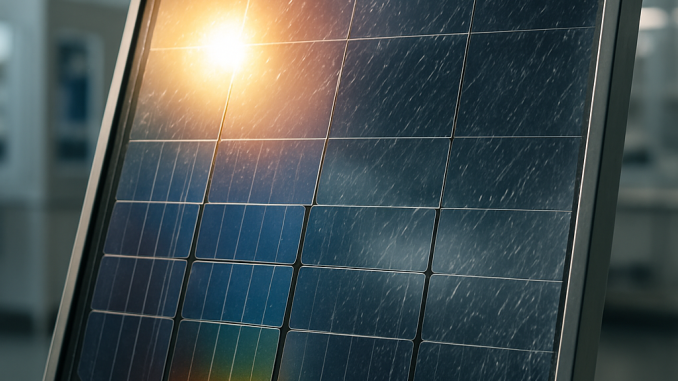
Solar technology is helping an old champion do more. Perovskite-silicon tandem cells place a light-absorbing perovskite layer above conventional silicon. The perovskite captures parts of the solar spectrum that silicon alone cannot use as effectively. The result: more electricity from the same area.
This promise has shifted the debate in photovoltaic research. Perovskite-silicon tandem cells can outperform silicon in the laboratory. The harder question is whether they can maintain that advantage in large modules exposed to years of sunlight, heat, moisture and electrical stress.
The distinction matters for renewable energy. A record-setting cell is a technical milestone; a reliable panel is an asset expected to produce energy consistently for decades. For perovskite-silicon tandem cells, long-term performance will be just as important as peak solar cell efficiency.
Analysis of the contenders: silicon and perovskite
Silicon remains the industry’s established leader. Manufacturers know how to produce it at scale, supply chains are mature, and developers understand how silicon panels perform in different climates. Its limitation is not a lack of commercial credibility, but less room for further efficiency gains.
Perovskite offers different strengths. Its light-absorbing properties can be tuned, and it can be deposited in thin layers using processes that may require less energy than silicon wafer production. In perovskite-silicon tandem cells, perovskite captures higher-energy light, while silicon converts the lower-energy light that passes through. The materials complement each other rather than compete.
The results have been striking. In June 2024, LONGi announced a certified efficiency of 34.6 per cent for a perovskite-silicon tandem cell—well above the typical performance of commercial silicon cells. The record shows the technology’s potential, but it comes from a small laboratory cell, not necessarily a finished panel operating outdoors. It also shows why photovoltaic research is focused on translating cell records into products.
This is where the contenders differ. Silicon has a long track record in the field; perovskite still needs to prove that its laboratory performance can withstand manufacturing, transport and prolonged exposure. The technology does not need to replace silicon everywhere, but its extra output must justify the engineering risks. For perovskite-silicon tandem cells, that means proving both high output and panel durability.
Key factors
The first consideration is the difference between peak cell efficiency and energy produced over time. A panel’s value depends not only on its output under standard test conditions, but also on how consistently it performs as temperatures and light levels change and materials age. Faster degradation can erase a small efficiency advantage. Solar cell efficiency matters most when it is maintained throughout the panel’s working life.
Durability is the main technical challenge. Perovskite materials can be sensitive to moisture and oxygen, while heat and ultraviolet light can speed up chemical and structural changes. Ion movement within the material, defects between layers and stress on electrical contacts can also reduce performance. In a module designed for outdoor use, each can become a potential failure point. These risks make panel durability a central measure of progress for perovskite-silicon tandem cells.
Manufacturers are addressing these issues with encapsulation, protective coatings, improved material compositions and more stable interfaces. They aim to keep water and oxygen out, let light in, and prevent layers from separating or changing in the heat. But these protections bring their own challenges: seals must last, materials must work together, and production must deliver consistent quality across large areas.
The second consideration is scale. A record cell can be made under carefully controlled conditions; a commercial panel must be produced repeatedly, with high yields and predictable performance. Maintaining uniformity becomes harder as the active area grows. Tiny defects that have little effect on a laboratory sample can reduce output or trigger degradation across a larger device. Scaling perovskite-silicon tandem cells will require manufacturers to manage these defects reliably.
Third is the evidence needed for commercialization. Standard reliability tests expose panels to cycles of heat, humidity, electrical bias and mechanical stress. Passing them is essential, but it does not prove a 25- or 30-year service life. Long-term outdoor data, independent testing and clear reporting on degradation rates will be vital to winning the confidence of project developers and financiers. Such evidence will help establish whether perovskite-silicon tandem cells are ready for commercialization.
Efficiency also has to make economic sense. More power per square metre could reduce land, mounting and installation costs, especially where space is limited. But a higher-performing panel will not necessarily succeed if it costs more to make, needs special handling or carries uncertain replacement risks. The calculation must include lifetime energy production, warranty terms and the cost of capital.
Environmental safeguards matter, too. Many high-performing perovskites contain lead. Although the amount in a device is small, manufacturers must show that it is securely contained and provide for responsible production and end-of-life recovery. A technology designed to support clean power will be judged across its entire lifecycle, not just by the electricity it generates.
The match scenario: from laboratory to rooftop
Perovskite-silicon tandem cells are unlikely to take over the solar market overnight. They are more likely to first serve applications where space is valuable and extra output brings a clear benefit. Early installations can provide field data while limiting exposure to the risks of a new technology.
In the near term, the key test is whether laboratory records can translate into repeatable manufacturing. If companies can increase production without sacrificing efficiency or yield, and show stable performance in accelerated tests and real-world conditions, the technology could become a credible product. If results remain limited to small cells and protected test environments, silicon’s reliability advantage will continue to shape purchasing decisions. This manufacturing challenge is a defining hurdle for perovskite-silicon tandem cells.
Buyers will need more than a headline efficiency figure. They will look for module-level performance, degradation rates, consistent production, warranty support and evidence from different climates. Researchers must also improve efficiency without making the material stack more fragile or expensive. In turn, better field data can guide the next generation of perovskite-silicon tandem cells.
Conclusion
Perovskite-silicon tandem cells have raised expectations for solar efficiency. Their best results show that combining materials can surpass the practical limits of silicon alone.
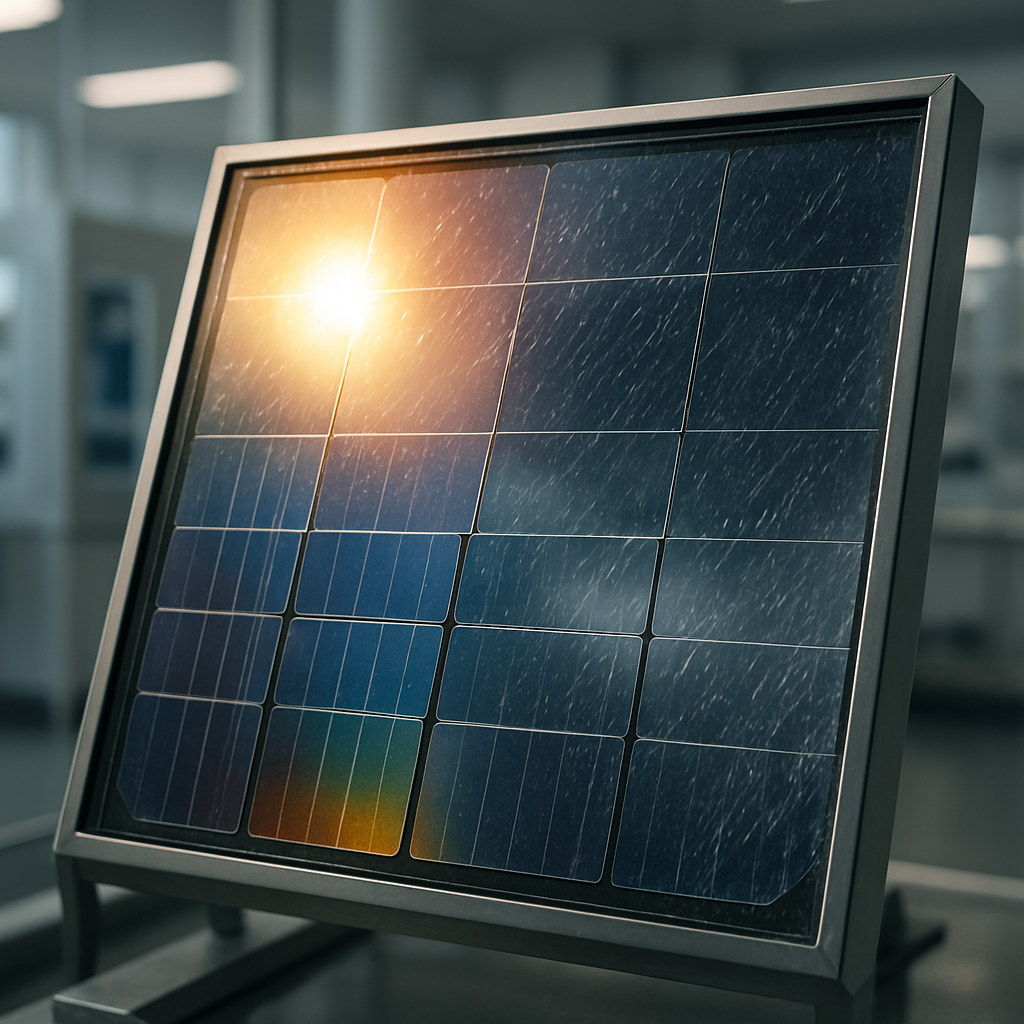
But durability will be the decisive test. The industry must turn record performance into reliable panels at a price and scale that make sense over a project’s lifetime. Until then, the efficiency breakthrough is real, but its commercial impact remains uncertain.