
Tied on the Rajbet Leaderboard? How the Rules Determine Final Placement
Introduction
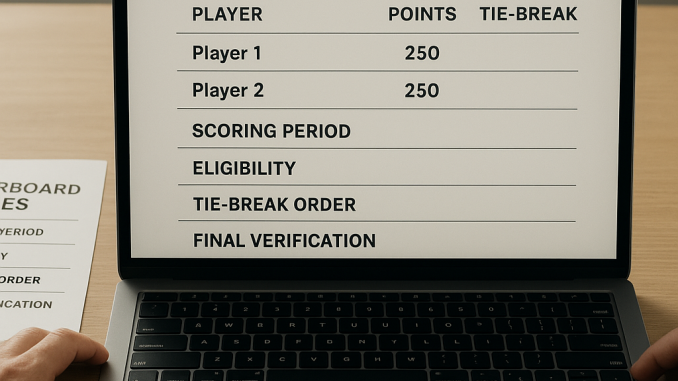
A leaderboard tie may look straightforward: two players have the same total and appear to share a position. But equal points do not always mean equal final placement. The rules may rank one player higher, leave both players tied, or set out another way to resolve the tie.
Without the rules for the specific Rajbet leaderboard and promotion period, it is not possible to state which method applies. Check the relevant terms rather than assume that another contest’s rules also apply. Scoring systems can differ between leaderboards, even on the same platform.
This matters most near a cutoff. A tie for first place, a prize or a qualification spot can have greater consequences than one in the middle of the table. The standings show the current positions; the rules explain how final placements are decided.
Equal totals, different cases
Two players with the same displayed total may have earned their points in different ways. One might have scored through many qualifying results, while another reached the same total with fewer, higher-value results. Whether that difference matters depends on the scoring formula and any secondary criteria in the rules.
First, check what the leaderboard measures: points, wins, correct predictions, activity or another defined outcome. Then see whether the displayed total is rounded, whether only a set number of results count, and whether all eligible entries are included. Identical totals on screen may not reflect identical underlying scores.
Next, check eligibility. A player may have the same score as a rival but be treated differently if the terms require a minimum number of qualifying actions, a particular account status or verification. These are not tie-breakers in the strict sense, but they can determine which entries qualify for the final ranking.
Finally, check when the comparison is made. A live table may change as results are recorded or reviewed. Unless the terms say otherwise, a position shown during the contest is not necessarily final.
How the rules determine placement
Start by checking whether the rules explain how ties are handled. Some contests allow players to share a rank; others require a clear order, especially when places come with limited prizes or qualification spots. The leaderboard’s layout does not tell you which approach applies.
If the rules require a tie-break, look for the order of criteria. Competitions might use a head-to-head result, another performance measure, the number of wins or the time a score was reached. These are examples, not confirmed Rajbet rules. Apply the criteria in the order given rather than choosing one after the result is known.
Check the scoring definitions too. The terms may explain how points are earned, whether results are weighted, how incomplete or cancelled events are handled, and whether there is a maximum score. If displayed points are rounded, the official calculation may use more decimal places. Two totals that look identical could therefore differ—but only if the rules specify that calculation.
Check the scoring period, including its start and end times and the time zone. The terms may also say whether an action must be completed or submitted before the deadline. Late entries, results recorded after closing, or corrections made during review can affect the final table if the rules allow for them.
Some contests include a final verification stage. The rules may allow the organiser to review scores, exclude invalid entries or correct calculation errors. This does not mean the displayed ranking is unreliable; it means you should distinguish a provisional position from a confirmed one. A correction is not necessarily a tie-break.
Example: two players on the same total
Imagine Player A and Player B both have 120 points near the end of a contest. The total alone does not show who will finish ahead. First, check whether 120 is the complete, unrounded score and whether both players meet the same eligibility requirements.
If the rules say ties remain shared, the players may finish level. If they specify a secondary measure, that measure determines the order. A contest might use wins or a head-to-head result, for example, but neither applies unless the terms say so.
If the table is still live and one player has a result awaiting verification, you cannot conclude that the other has won the tie. The standings may not yet reflect the final calculation. The terms explain whether pending results count and when placements are confirmed.
The same issue matters more at a prize or qualification cutoff. If two players are tied for the last available spot, the rules may specify a tie-break, give them equal treatment or set out another procedure. Without that wording, the leaderboard alone cannot predict the outcome.
Conclusion
A tie on the Rajbet leaderboard can only be understood by checking the rules for that specific contest. Look at how points are calculated, when the table closes, who is eligible and whether ties are shared or resolved using a stated order of criteria.
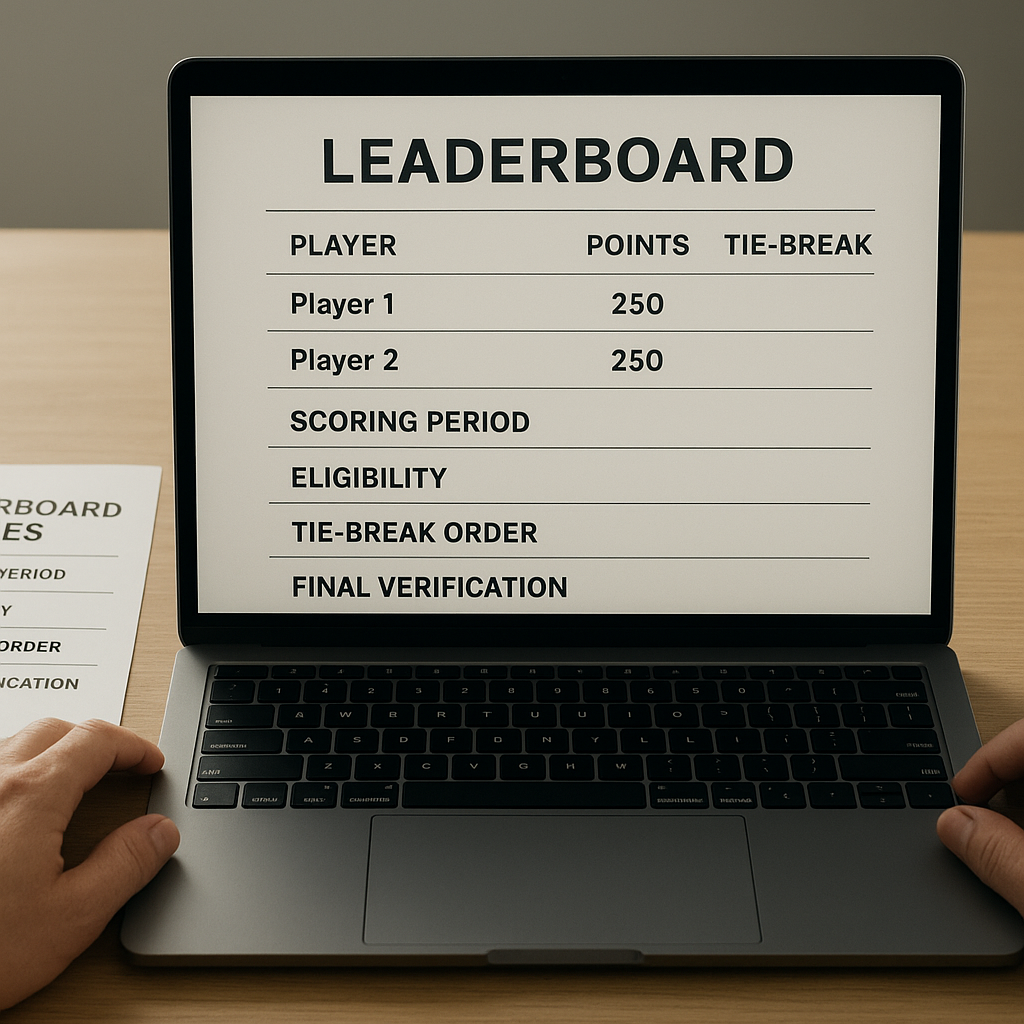
Read the rules in sequence, and do not assume that common practice elsewhere applies. If the tie-break order is clear, follow it. If the terms are silent or ambiguous, the leaderboard cannot fill in the missing details.